Email:sales2@tjqiangbang.com Tel:+022 87820460

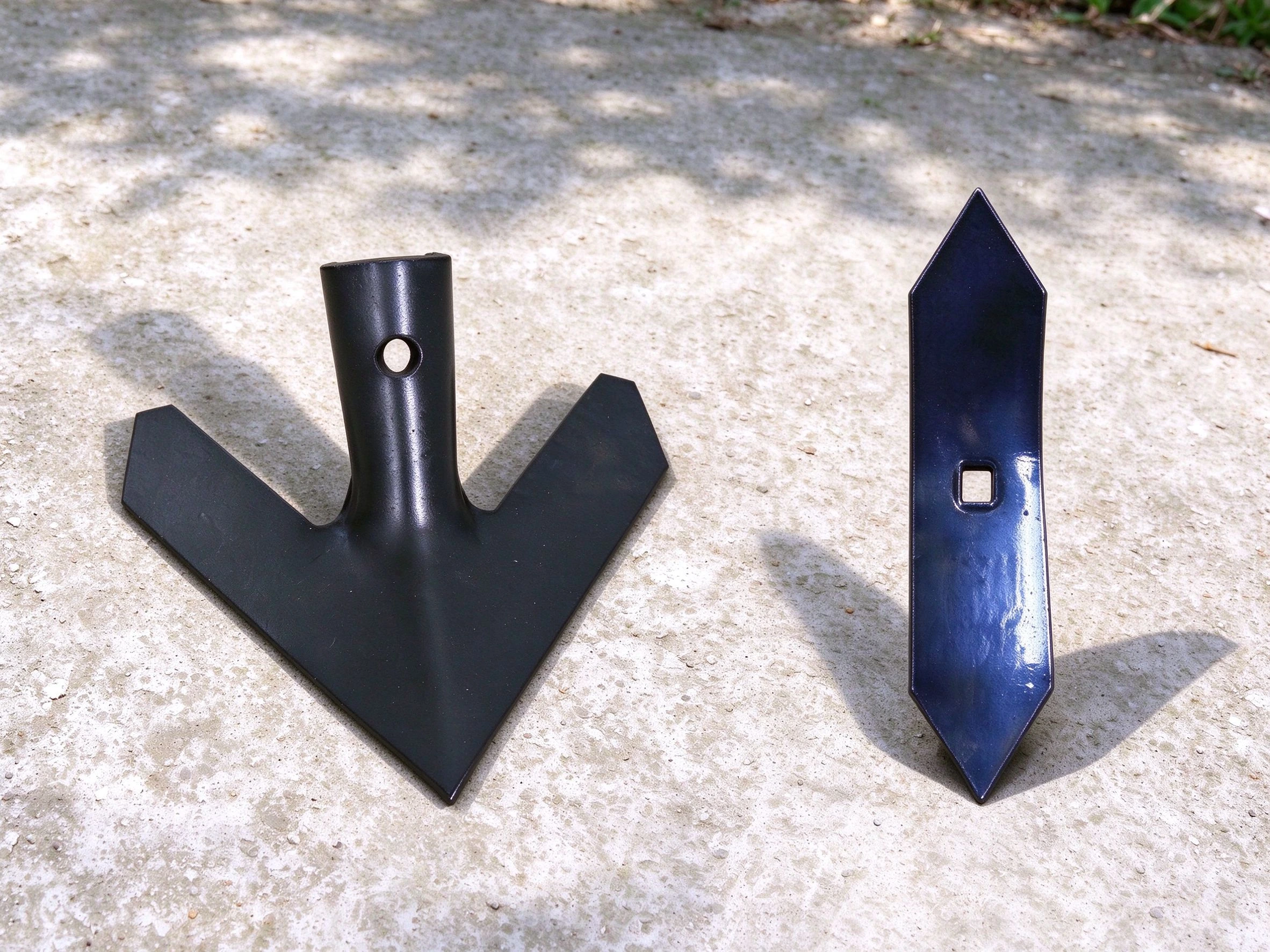
Cultivator Sweeps vs Points: What’s the Difference on One Shank?

Both parts sit on the same shank, but they cut differently. A cultivator sweep slices weeds and levels topsoil across a wide wing; a cultivator point opens hard ground on a narrow nose and lowers draft. The sweep suits a shallow pass before planting; the point repairs compacted lanes. Choose by the job in front of you, then match the mounting holes.
Cultivator Sweep: Wide Wing Work Across the Row

The cultivator sweep is a replacement wear part for cultivators and field tillage equipment. In the row, the wing does the work: it slices through weeds, lifts and loosens the topsoil, and leaves a smooth, well-prepared seedbed. Soil disturbance stays low, so the row keeps its profile for planting.
We forge each sweep from boron steel or alloy steel, then heat-treat it for hardness, wear resistance and impact strength. Widths, thicknesses and mounting hole layouts change with the machine, so one sweep family covers row crop cultivation, vegetable farming and general land preparation.
Fit matters as much as shape. A sweep that sits loose rocks, so the wing cuts unevenly. Check the hole edges and bolt seats with every worn sweep.
Cultivator Point: The Narrow Nose That Breaks Compacted Ground
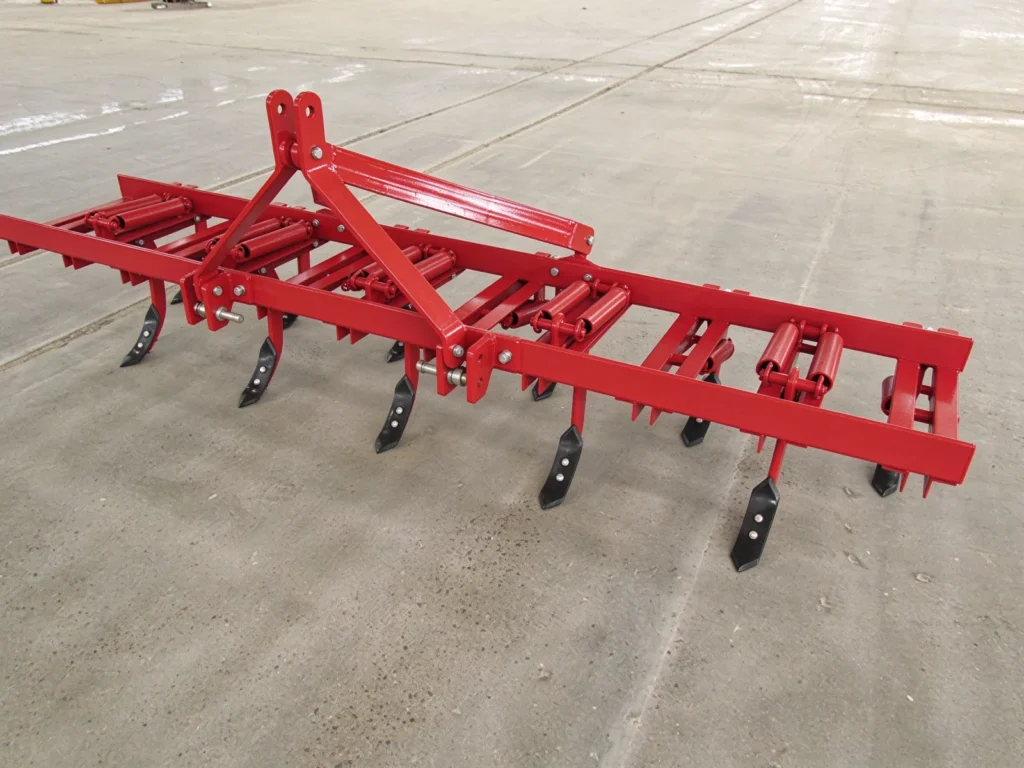
A cultivator point, also sold as a cultivator tip or plough tip, is the pointed partner of the sweep. It penetrates the soil, loosens compacted ground and removes weeds, with lower draft resistance than a wide wing. Ours is reversible and double-ended: the same nose at both ends, holes in between, so a worn nose leaves a second end.
Both parts share one workshop process: boron steel or alloy steel, precision forging and heat treatment. The difference sits at the edge. A sweep spreads the cut across a wing; a point concentrates it on a nose that enters hard ground.
Table 1. Sweep and point side by side.
| Check item | Cultivator sweep | Cultivator point | Unit / measure |
| Wing or nose width | Wide wing across the row | Narrow pointed nose | mm (in) |
| Edge thickness | Even along the wing | Thicker behind the nose | mm (in) |
| Mounting holes | Multiple hole layouts | Multiple hole layouts | count |
| Main job | Slice weeds, level topsoil | Penetrate, break compaction | job |
| Draft load | Higher on one shank | Lower on one shank | relative |
| Field fit | Row crop, vegetable, seedbed | Compacted or uneven ground | use |
Read the table as a job match, not a ranking. A row that has been worked shallow and often needs the sweep. A lane that hardens under wheels needs the point first, then the sweep.
Cultivator Sweeps for Sale: Three Checks Before You Order
Buyers who compare cultivator sweeps for sale online usually need a fit, not a catalogue. Send three items with an enquiry. First the hole layout and centre distance, then the wing shape as a photo or a paper trace, and the thickness at the edge. Add the machine brand and model, plus the soil you work.
Field research from PAMI on sweeps and cultivator shanks notes that sweep pitch drifts as a shank flexes under load. A flatter replacement on a soft shank therefore runs shallower than the part it replaced. Matching the shape to the shank matters as much as matching the holes.
Keep one worn sweep and one point as workshop samples for hole spacing and edge thickness.
OEM and ODM orders cover custom dimensions, logos, packaging and finishes. Both pages list multiple sizes and hole configurations, so a drawing match comes before a price.
FAQs
Is a cultivator sweep a direct replacement for a point?
No. The two parts share a shank but not an edge. A sweep spreads the cut across a wing, while a point concentrates it on a nose. Swap one for the other only when the job changes.
Which part suits row crop cultivation, and can both parts share one shank?
The sweep suits row crop cultivation, because the wide wing keeps the row profile. Both parts fit cultivators and tillage equipment with multiple hole configurations, so one shank often takes either part. Confirm the hole layout first.
How do I know when a cultivator sweep is worn out?
Look at the wing tips. A rounded, polished edge with a narrow land means the cut is losing its shape. Check the holes as well, because a stretched hole lets the sweep shift on the shank.
What should I send with a request for cultivator sweeps?
A photo or trace of the old part, the hole layout, the edge thickness and the machine model. OEM orders also cover custom dimensions, logos, packaging and surface finishes.
In short, take the sweep for a wide shallow cut and the point for hard ground. Then quote on hole layout, edge thickness and machine model.
Request a Quote with your hole layout, edge thickness and monthly quantity, and contact our team for a drawing match.