Email:sales2@tjqiangbang.com Tel:+022 87820460

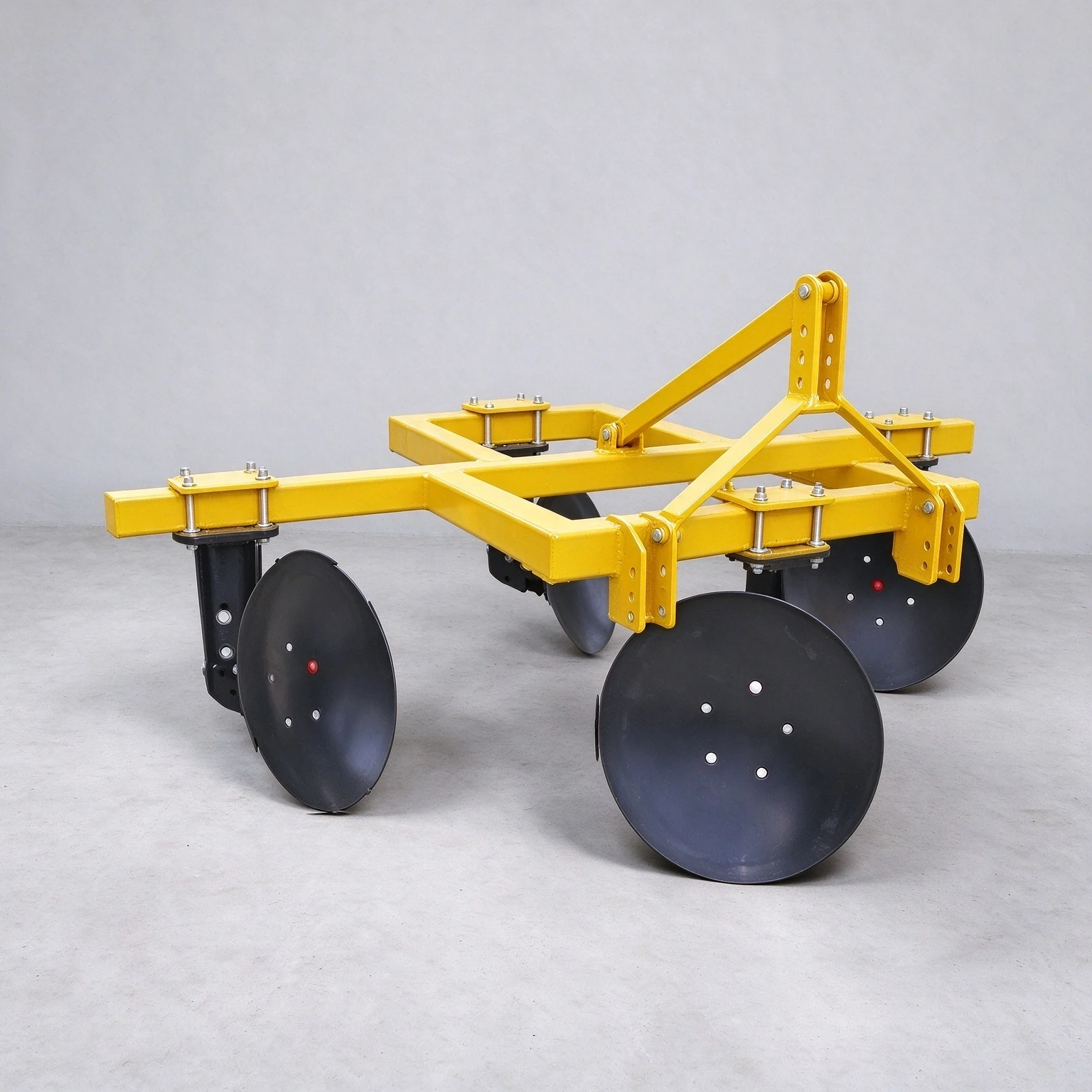
Disc Ridger Specifications: Cut Width, Ridge Width and Power

A disc ridger is chosen by three numbers, not by colour or by brand: cut width, ridge width and matched tractor power. Buyers who already own a tractor start with the power band and work backwards. The tables below follow that order, so a model can be checked against a tractor and a crop before any quote. Model data here comes from the five 3Z models in our own range; the same three checks apply to any disc ridger.

Disc Ridger Model Range at a Glance
The disc ridger comes in five models. Cut width runs from 800 mm (31.5 in) to 2,600 mm (102.4 in). Matched tractor power runs from 20 hp (15 kW) to 90 hp (67 kW). All five use a three-point hitch and a tubular box frame.
The range reads as two groups. 3Z-80 and 3Z-120 are built for narrow potato and vegetable ridges. 3Z-140, 3Z-180 and 3Z-260 carry wider beds and larger tractors. The two tables below hold the full numbers, split into ridge geometry and tractor matching.
| Model | Cut width, mm (in) | Ridge width, mm (in) | Ridge height, mm (in) | Ridges per pass |
| 3Z-80 | 800 (31.5) | 200–450 (7.9–17.7) | 150–260 (5.9–10.2) | 1(2) |
| 3Z-120 | 1,200 (47.2) | 200–450 (7.9–17.7) | 150–260 (5.9–10.2) | 1(2) |
| 3Z-140 | 1,400 (55.1) | 300–500 (11.8–19.7) | 150–300 (5.9–11.8) | 1 |
| 3Z-180 | 1,800 (70.9) | 300–500 (11.8–19.7) | 150–300 (5.9–11.8) | 1(2) |
| 3Z-260 | 2,600 (102.4) | 300–500 (11.8–19.7) | 150–300 (5.9–11.8) | 1(2) |
One column needs a word of explanation. Ridges per pass reads 1(2) on four models and 1 on 3Z-140. The bracket means the frame can be set for a single ridge or a pair in one pass. 3Z-140 is built for one ridge only, which suits a bed that is already wide.
| Model | Tractor power, hp (kW) | Hitch |
| 3Z-80 | 20–30 (15–22) | Cat I |
| 3Z-120 | 30–40 (22–30) | Cat I |
| 3Z-140 | 50–60 (37–45) | Cat II |
| 3Z-180 | 60–70 (45–52) | Cat II |
| 3Z-260 | 70–90 (52–67) | Cat II |
Weight also shapes how the frame behaves on the linkage. Across the five models it runs from 120 kg (264.6 lb) to 246 kg (542.3 lb). A small tractor therefore carries less offset load behind the linkage than it would with a ridger plough of the same working width.
Frame and discs are described on the product page as a heavy-duty tubular box frame, a three-point hitch and 65Mn heat-treated discs. The same page notes convenient transport and field adjustment. That adjustment range is what makes one frame usable across two crops.
Three Numbers That Set Your Ridge: Cut Width, Ridge Width and Ridge Height
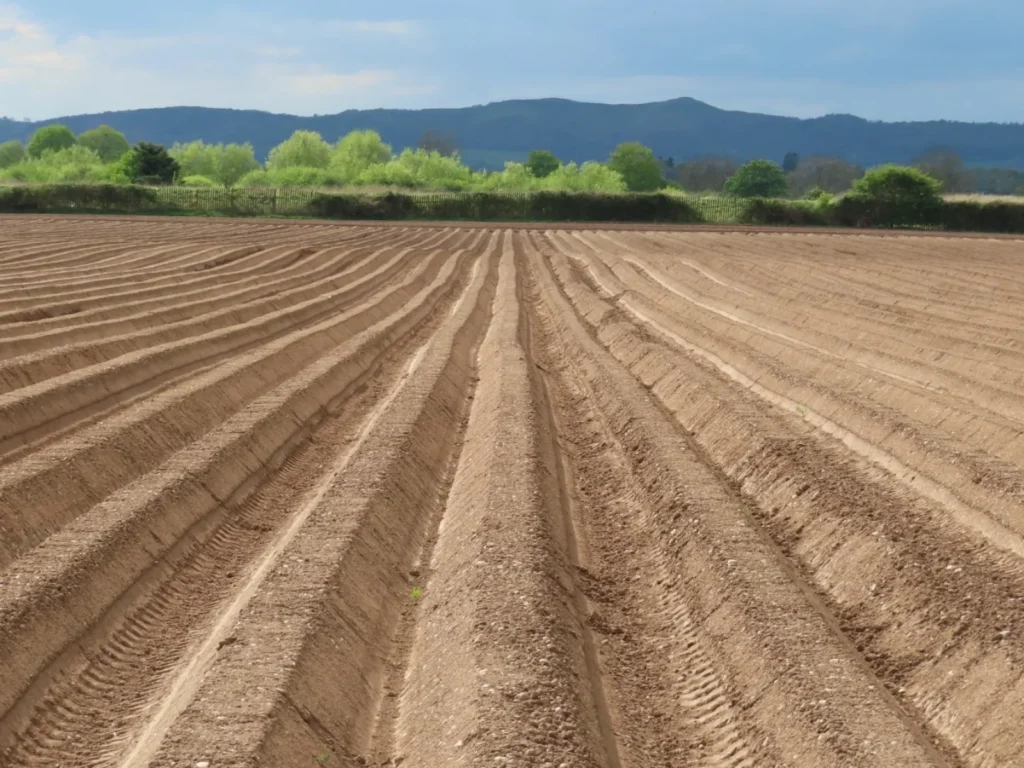
Cut width is the strip of soil the discs work in a single pass. It is not the distance between ridge centres, and it is not the base of the ridge. A 3Z-260 with 2,600 mm (102.4 in) of cut width does not leave a ridge 2,600 mm wide.
Ridge width is the base the discs build, and the range splits in two. 3Z-80 and 3Z-120 work 200–450 mm (7.9–17.7 in). 3Z-140, 3Z-180 and 3Z-260 work 300–500 mm (11.8–19.7 in). Set it to the bed your planter or harvester runs.
That match matters because the ridge a machine leaves is the ridge the next pass has to follow. On potatoes the following pass is often the potato ridger used for earthing up. A ridge base outside its range forces a second shaping pass.
Ridge height is set at disc depth. The two smaller models reach 150–260 mm (5.9–10.2 in). The three larger models reach 150–300 mm (5.9–11.8 in). Height is the number that decides drainage and the depth of soil above the tuber or seed.
Both figures are adjustment ranges rather than fixed outputs. Ridge width follows disc spacing, and ridge height follows disc angle and depth. One disc ridger can therefore be re-set for a second crop between seasons without changing the frame.
Matching Tractor Power and Hitch Category
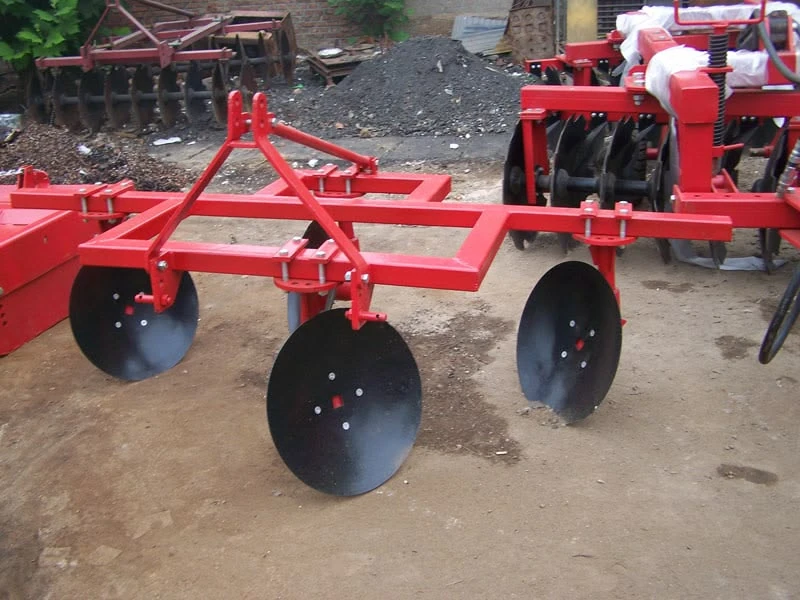
Power bands on the 3Z disc ridger are narrow and do not overlap. A 50 hp tractor falls inside the 3Z-140 band of 50–60 hp (37–45 kW). A 45 hp tractor falls between 3Z-120, which tops out at 40 hp, and 3Z-140, which starts at 50 hp.
One point in the range needs a second look. 60 hp sits on the boundary between 3Z-140 at 50–60 hp and 3Z-180 at 60–70 hp. At that power the choice is decided by ridge width and rows per pass rather than by the power column.
Hitch category matters as much as power. 3Z-80 and 3Z-120 use Cat I. 3Z-140, 3Z-180 and 3Z-260 use Cat II. The two categories carry different lower-link pin sizes, so confirm the category on your tractor before you order rather than after the machine arrives.
Read the power column as a band, not a target. A 3Z-260 at 70 hp will pull a smaller ridge than the table maximum. The same model at 90 hp has margin in light soil and less margin in heavy clay. The discs lift more soil at the same angle.
Adjusting Disc Angle and Spacing for Soil and Crop
Ridge size is set by two adjustments on the frame: the distance between discs and the angle at which each disc meets the soil. The same two adjustments change ridge width and ridge height on a disc ridger of any size.
An ATNESA disc ridger study of an animal-drawn unit describes the same relationship. Ridge width and height are varied by the disc angle and the distance between the discs, not by a fixed frame setting.
Work through the five steps below in order. Each step assumes the previous one is already locked:
- Set row spacing first. It comes from the planter or the harvester that follows, not from the ridger.
- Set disc spacing to the ridge base. Then lock both gangs before touching the angle.
- Set disc angle. A steeper angle moves more soil into the ridge and raises its shoulder.
- Set working depth to reach the ridge height. Then check that the frame sits level across the width.
- Make a short test pass. Measure ridge width and height, then correct one adjustment at a time.
Never change angle and spacing in the same pass. One adjustment at a time keeps the cause of a change traceable, which matters when a ridge line drifts across a field.
Soil changes the same settings. A damp, heavier soil needs less angle to reach the ridge height, because the discs carry more soil per pass. A dry, lighter soil needs more angle or more depth to build the same ridge. Re-check the ridge after rain rather than carrying the old setting into the next block.

Disc Wear and When to Replace the Blades
Discs on the 3Z frame are 65Mn spring steel, heat treated for hardness. Wear concentrates at the cutting edge and on the concave face, where soil flow is heaviest.
Check four points at each service: cutting edge, concave face, disc run-out and hub bolts. A rounded edge pushes soil instead of lifting it, and the ridge stops holding the shape you set at the original angle.
Working angle also sets wear rate. A steeper disc angle puts more soil pressure on the concave face. The disc wears faster at the setting used for a tall ridge than at the setting used for a shallow one.
Replace a disc when the edge no longer cuts cleanly at working angle, or when run-out makes the ridge line wander. Replacements are ordered as separate ridger disc items, so the frame stays in service while new discs are fitted.
Disc Ridger or Ridger Plough: Two Ridge Shapers Compared
Both machines mount on a three-point linkage and both come in five sizes. They differ in ridge size, in how the soil is moved, and in the power they need:
| Specification | Disc ridger, 3Z | Ridger plough, 3QL |
| Working width, mm (in) | 800–2,600 (31.5–102.4) | 800–3,900 (31.5–153.5) |
| Ridge width, mm (in) | 200–500 (7.9–19.7) | 700–900 (27.6–35.4) |
| Ridge height, mm (in) | 150–300 (5.9–11.8) | 200–250 (7.9–9.8) |
| Weight, kg (lb) | 120–246 (264.6–542.3) | 240–450 (529.1–992.1) |
| Matched power, hp (kW) | 20–90 (15–67) | 25–80 (18.6–59.7) |
| Hitch | Cat I and Cat II | Standard three-point mounted |
| Ridge forming parts | 65Mn heat-treated concave discs | Wear-resistant plough shares |
The disc ridger leaves ridges of 200–500 mm (7.9–19.7 in) and runs on 20–90 hp (15–67 kW). The ridger plough leaves beds of 700–900 mm (27.6–35.4 in) and runs on 25–80 hp (18.6–59.7 kW) across its five models.
The plough also reaches 3,900 mm (153.5 in) of working width, against 2,600 mm (102.4 in) on the largest disc ridger. Its frame is heavier at every size. The range is 240 kg (529.1 lb) to 450 kg (992.1 lb), against 120 kg (264.6 lb) to 246 kg (542.3 lb).
The decision follows the bed size you plant into. Ridges under 500 mm point to the disc ridger. Beds of 700–900 mm point to the ridger plough. Cutting action is the second difference: discs cut and lift the soil, while shares cut and turn it.
Crop lists on the two product pages are close. Both name potatoes, maize, vegetables, sugarcane, tobacco and other row crops, so the crop alone rarely decides the machine. Bed geometry and tractor power decide it.
FAQs
Which disc ridger model fits a 50 hp tractor?
3Z-140. Its band is 50–60 hp (37–45 kW), and it mounts on Cat II linkage.
Which model covers 60 hp?
Both 3Z-140 and 3Z-180 cover 60 hp. Step up to 3Z-180 when you need ridge width in the 300–500 mm range with a pair of ridges in one pass.
What ridge width can a disc ridger build?
200–450 mm (7.9–17.7 in) on 3Z-80 and 3Z-120. 300–500 mm (11.8–19.7 in) on 3Z-140, 3Z-180 and 3Z-260.
Can one disc ridger form two ridges in a single pass?
Four models list 1(2), which allows a single ridge or a pair. 3Z-140 is built for one ridge.
What are the discs made of?
65Mn spring steel, heat treated. The frame is a tubular box section.
Which crops is the 3Z disc ridger used for?
The product page lists potatoes, maize, vegetables, sugarcane, tobacco and other row crops.
In short, Before you order. Match the model to tractor power first, then confirm ridge width and height against the bed your planter or harvester runs. The 3Z disc ridger covers 20–90 hp (15–67 kW) and ridge widths of 200–500 mm (7.9–19.7 in), so most row-crop tractors fall inside the range.
Request a Quote with your tractor power, target ridge width and height, and rows per pass. Include the crop and row spacing so the model and hitch category are checked before quoting. You can also contact our team directly.